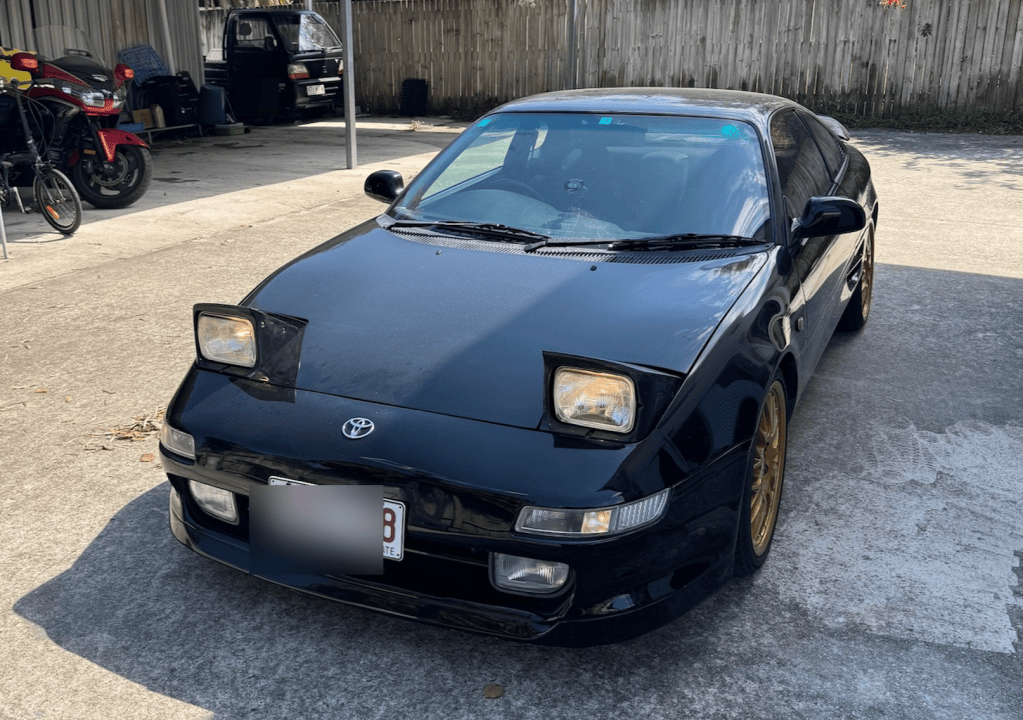
My first JDM import, a Honda Acty kei truck, went surprisingly smoothly. So when my son Matt chose a 1997 Toyota MR2 as our second import, I thought I knew what I was doing. I did — but the second car found completely different ways to keep things interesting.
Why an MR2?
This time, Matt chose the car.
He loved the pop-up headlights.
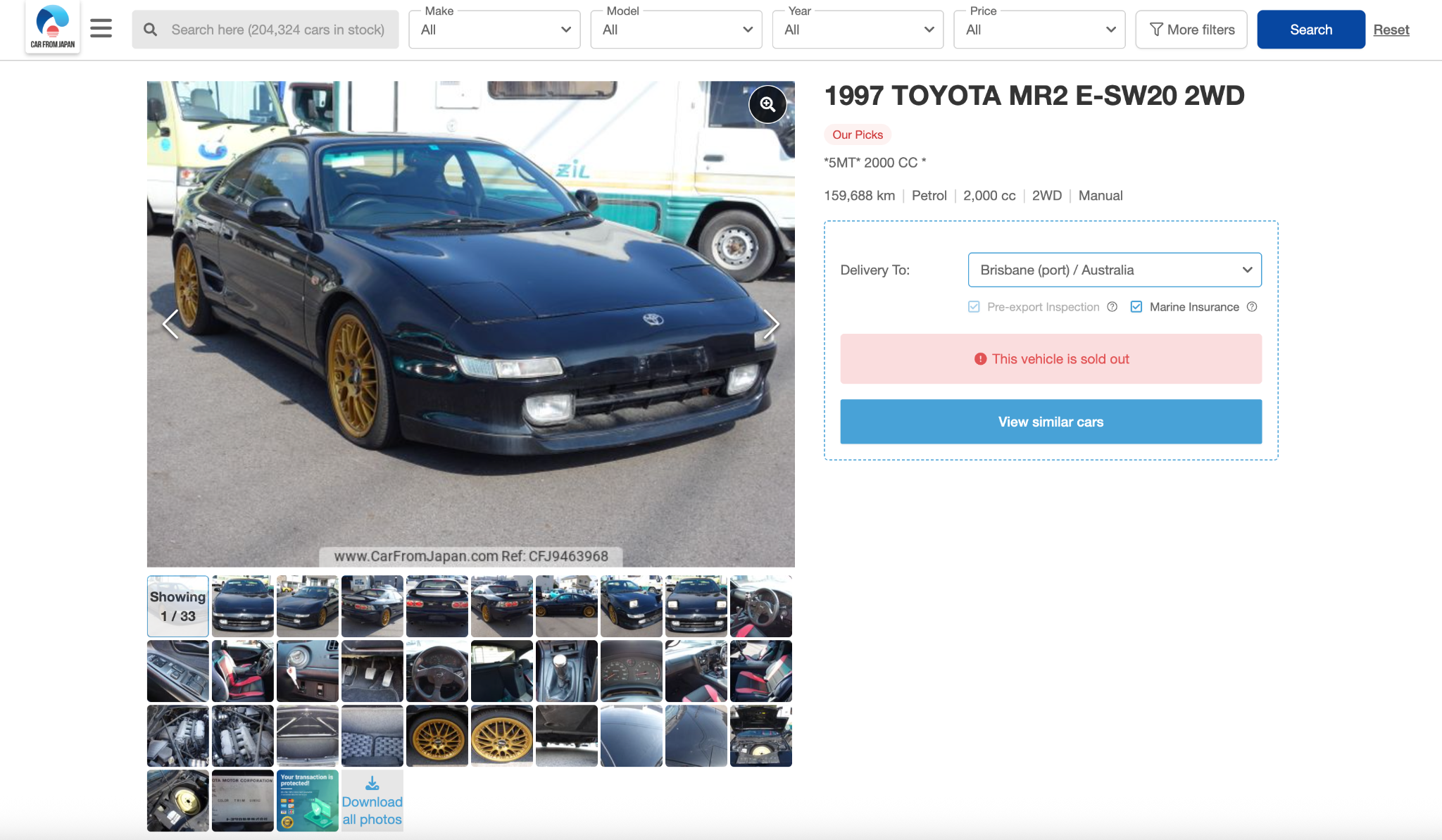
The car was a 1997 Toyota MR2 SW20 G-Limited, manual, 2.0-litre petrol, with 159,688 km. Before we paid, I checked with Car From Japan that the air conditioning worked and confirmed that it was the G-Limited grade.
I have to admit that when I first looked at the photos, I thought it didn’t look that different from my Toyota Prius i-Tech.
I was completely wrong.
The MR2 is a proper two-seat, mid-engined sports car. It feels totally different. It is low, direct and enormous fun to ride in — and even more fun to drive.
Once it arrived, I understood exactly why Matt had chosen it.
This was supposed to be easier the second time
By 2024 I had already imported the Acty, so I understood the broad process:
find the car → check eligibility → get ROVER approval → ship it → customs and biosecurity → compliance → registration → drive it home.
I also already knew who I wanted to use for the Australian end of the process.
Within days of buying the MR2, I contacted Japan Imports and told them we were importing another car. I asked whether it could be delivered to them for compliance and registration when it arrived.
So compared with the Acty, I felt organised from the start.
That did not mean the second import followed the same script.
Step 1: Buying the MR2
The Car From Japan invoice listed a total of:
US$10,373 CIF Brisbane
That covered the car, shipping, pre-shipment inspection, marine insurance and buyer protection.
I chose to pay through PayPal because I wanted the extra reassurance of Buyer Protection when sending a large amount of money overseas.
That choice came at a cost. With the online payment fee included, the amount to be paid became:
US$10,778
There was then a slightly unusual wrinkle: PayPal Japan had a transaction limit of 1,000,000 yen, so Car From Japan asked me to split the payment into two equal transactions.
I paid:
A$8,371.47 × 2 = A$16,742.94
The lesson from the Acty still applied: the price you see on the Japanese listing is not the final amount that leaves your Australian bank account. Invoice currency, exchange rates and payment fees matter.
In my case, I was knowingly paying extra for the peace of mind of using PayPal rather than simply choosing the cheapest payment method.
Step 2: ROVER approval — familiar process, more questions
I lodged the Australian import application myself again.
The ROVER fee in July 2024 was $42.20.
This application needed a little more back-and-forth than the Acty. I received requests for further information in late July and again in early August.
The application was approved on 9 August 2024.
So although I knew the system the second time, I was reminded not to assume an application will simply sail through because a previous one did.
Step 3: Shipping from Nagoya
The MR2 was booked on:
Vessel: TRANS FUTURE 6
Voyage: 153
Departure: Nagoya, Japan
ETD: 20 August 2024
Destination: Brisbane
The shipping documents showed an early-September arrival into Brisbane.
So far, so familiar.
Then the Australian end became more complicated than I had expected.
Step 4: The second import did not use the same hand-off process
With the Acty, AutoHub had come back to me while the car was on its way and told me they had received advice that the vehicle was arriving. They then handled the Australian customs, biosecurity and port logistics.
I expected the MR2 arrival to unfold in much the same way.
On 28 August 2024, CoastalBridge contacted me directly with the MR2’s Arrival Notice, followed shortly afterwards by their port/shipping-line invoice.
Because they were the people contacting me about the car’s arrival, I assumed they were going to handle the Australian arrival process in a similar way to AutoHub on the Acty.
I paid their invoice and asked them to arrange delivery to Japan Imports once the car cleared. When the ship arrived, I emailed asking whether there were any documents I needed to complete. A couple of days later I followed up again asking when the car would be delivered to the compliance workshop.
Then, on 10 September, CoastalBridge contacted me asking when I would be collecting the car because it was now attracting storage charges.
That was when I realised I had misunderstood their role. CoastalBridge was acting on the shipping-line and Delivery Order side; they were not arranging my customs clearance or transport to Japan Imports.
I don’t regard that as CoastalBridge doing anything improper. I had simply assumed the second import would work like the first one.
So, with the MR2 already sitting at the port, I went back to AutoHub/Dazmac — the people who had helped with the Acty — and asked them to take over the customs clearance and delivery.
It was a very useful reminder that two cars bought through the same exporter can still have completely different hand-off arrangements in Australia.
Step 5: International shipping still loves paper
Once Dazmac stepped in, much of the customs process could be completed electronically.
I signed Dazmac’s customs documents online and was impressed by how efficient the system was.
Then came the Bill of Lading.
The shipping-line agent needed the physical original Bill of Lading surrendered before the Delivery Order could be released.
So, in the middle of an increasingly digital process, I found myself scanning the document, then sending the original to Melbourne by Express Post and supplying the tracking number.
Once the shipping-line agent had the information they needed, the Delivery Order was released and Dazmac could continue with customs clearance.
Lesson: do not assume every shipping document can be handled electronically. Find out early whether the original Bill of Lading will need to be physically surrendered.
Step 6: Nasty surprise #1 — the MR2 failed quarantine
The Acty had passed Australian biosecurity without needing extra cleaning.
The MR2 did not.
Australian quarantine directed that quarantine-risk material be removed before the car could be re-inspected.
The extra invoice was:
| Quarantine treatment | Cost |
|---|---|
| Removal of quarantine-risk material | $350.00 |
| AQIS re-inspection attendance | $150.00 |
| GST | $50.00 |
| Total | $550.00 |
This was particularly frustrating because the car had been prepared and cleaned before export.
I asked whether there were photographs showing exactly what had caused the failure. Dazmac had not been supplied with photographs or much detail beyond the treatment direction.
I don’t think it is fair to conclude from that that anybody in Japan had failed to clean the vehicle properly. Australian biosecurity makes its own assessment when the vehicle arrives.
The practical lesson is simpler:
A pre-export clean does not guarantee that Australian biosecurity won’t require more cleaning.
If you are budgeting for an import, leave room for this possibility.
Step 7: Customs, biosecurity and delivery
Dazmac’s main Australian clearance invoice came to:
$2,733.54
That included customs clearance, quarantine inspection and attendance, destination handling, delivery to Japan Imports, government processing charges and import GST.
The biggest single component was the Australian import GST of $1,556.04.
There was also a separate $444.28 shipping-line/port invoice from Coastal Bridge covering items including the Delivery Order fee, port access, security, wharf handling, harbour dues, wharfage and facility fee.
One reason I like keeping the original invoices is that a phrase such as “port costs” can hide half a dozen different charges.
Step 8: Compliance and Queensland registration
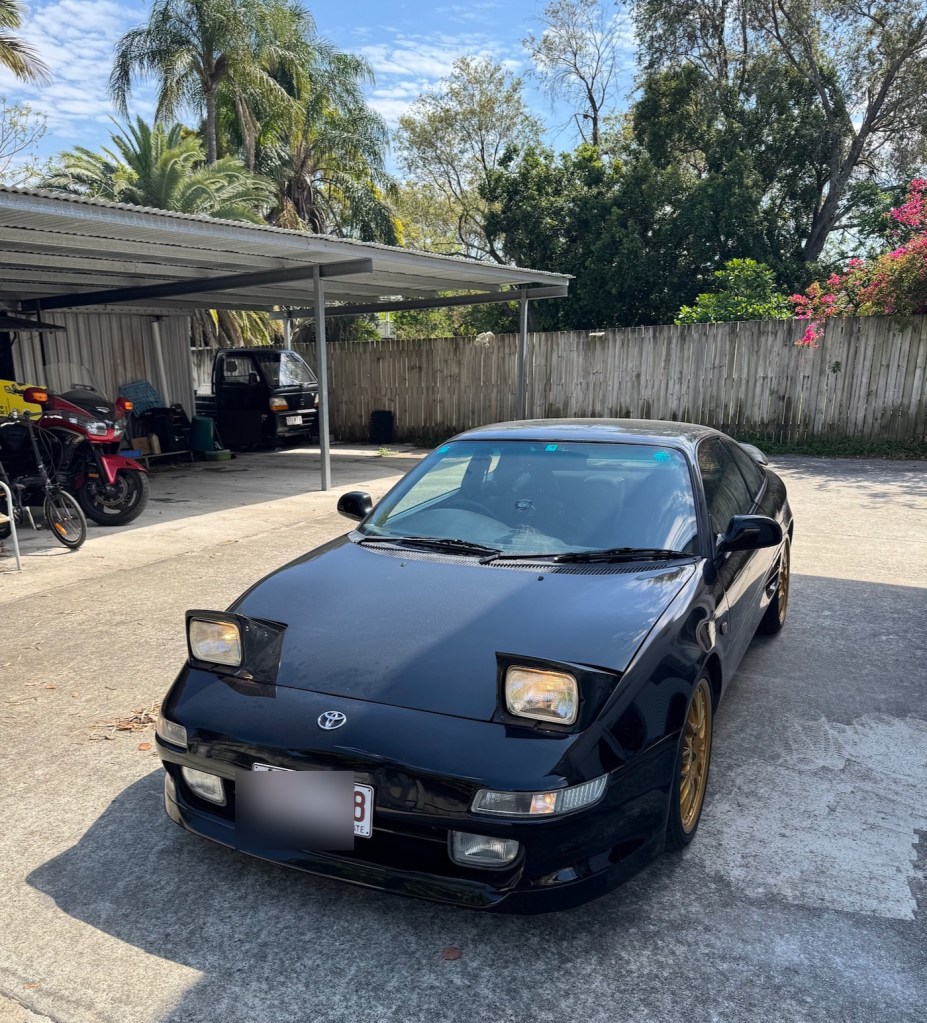
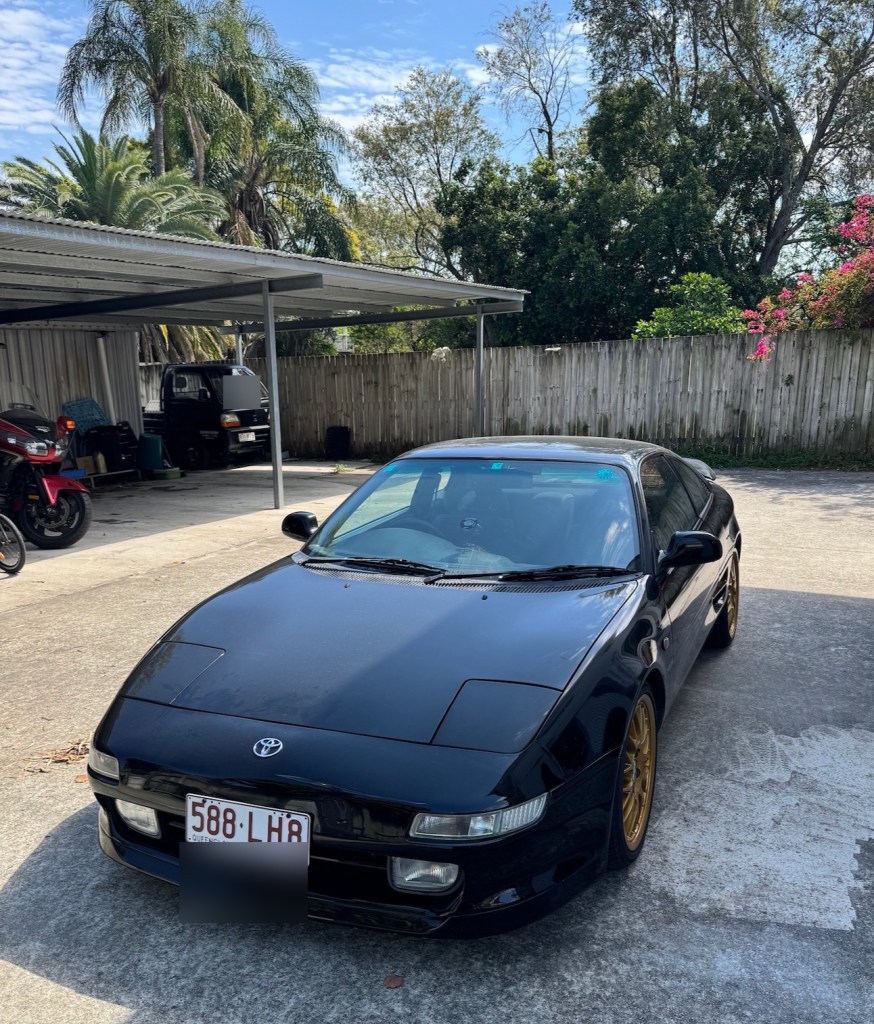
Once the MR2 reached Japan Imports, the process became pleasantly familiar again.
Their invoice was $1,817.55, covering the 25-year compliance process, safety certificate, registration-related costs and their service fees.
On 19 September, I emailed asking whether the car had arrived.
The reply was that it had already been there for a couple of days and was being registered that afternoon.
Step 9: Nasty surprise #2 — a bill after we already had the car
After we collected the MR2, I checked whether there were still any storage fees owing at the wharf.
I was initially told there were none.
Then, on 24 September, Dazmac contacted me again.
The wharf had sent through a storage invoice after all.
The car had accumulated five days of wharf storage.
| Late storage bill | Cost |
|---|---|
| Wharf storage — 5 days | $505.85 |
| GST | $50.59 |
| Total | $556.44 |
You would think it would be annoying to receive another bill after the car was already home.
But my response at the time was:
“No worries Cerise, the car is SICK!”
Which probably tells you how I felt about the MR2 by then.
So what did the MR2 actually cost?
These are the documented import, clearance, compliance and registration costs I have from the 2024 paperwork:
| Stage | Actual cost |
|---|---|
| Car From Japan payment, including shipping and online payment fee | $16,742.94 |
| ROVER application | $42.20 |
| Coastal Bridge port/shipping-line charges | $444.28 |
| Dazmac customs, government charges, biosecurity and delivery | $2,733.54 |
| Extra quarantine cleaning and re-inspection | $550.00 |
| Japan Imports compliance and registration invoice | $1,817.55 |
| Late wharf-storage invoice | $556.44 |
| Documented total | $22,886.95 AUD |
So, rounded off, the MR2 cost about $23,000 to get from Japan to being registered in Queensland.
I have not included comprehensive insurance in that total because I treat insurance as an ongoing ownership cost rather than part of the import itself.
The first import and the second import were completely different
The Acty taught me that importing a Japanese car yourself was much more manageable than I had feared.
The MR2 taught me something slightly different:
knowing the process doesn’t mean the next import will follow the same process.
The Acty did not need quarantine cleaning. The MR2 did.
The Acty’s Australian hand-off was simple: AutoHub came back to me as the ship approached and took care of the clearance side. With the MR2, CoastalBridge contacted me first, but their role was different. I only discovered that distinction once the car was already at the port.
The MR2 also involved the physical Bill of Lading, a quarantine re-inspection and a wharf-storage invoice that arrived after we had the car.
None of those problems was catastrophic.
But together they show why I would never budget a Japanese import down to the last dollar.
What I would do next time
If I imported a third car, I would still do much of the process myself.
But I would:
- confirm exactly who is handling customs clearance and port delivery before the ship arrives;
- ask early whether an original Bill of Lading must be physically surrendered;
- keep a contingency for quarantine treatment and re-inspection;
- assume storage can become expensive very quickly if paperwork or release is delayed;
- keep every invoice, email and shipping document; and
- check the final landed cost using the amount actually charged to my Australian account, not just the displayed CIF conversion.
Was it worth it?
Absolutely.
Matt chose the MR2 because he loved the pop-up headlights.
I initially looked at it and thought, “It’s another Toyota. How different can it be?”
Very different, as it turns out.
The MR2 is one of those cars that makes a trip feel like an event. It is fun at normal road speeds, fun from the passenger seat and fun before you have even moved because you can press a button and make the headlights pop up.
The paperwork was messier than the Acty.
The quarantine bill was annoying.
The late storage invoice was unexpected.
But by the time that final bill arrived, I had already seen and driven the car.
My email response probably says it best:
The car is SICK.
A note for anyone using this as a guide
This article describes my own 2024 import. It is not a current quote and it does not mean another import will attract the same fees or follow exactly the same process.
Import rules, exchange rates, shipping arrangements, port fees, biosecurity requirements, compliance requirements and registration charges change.
Before buying, check current Australian Government requirements and the registration rules in your state or territory.
Japan to Driveway shares personal experience and general information. It isn’t legal, customs, financial or mechanical advice.
About this article
I kept the emails, invoices, shipping documents, ROVER correspondence and handwritten notes from this import.
Later, I went back through them with Barry — my name for ChatGPT — to reconstruct the timeline, reconcile the costs and separate what I remembered from what the documents actually showed.
This article is the result.
Japan to Driveway
Real cars. Real invoices. Real Australian JDM imports.
 Japan to Driveway
Leave a comment